Fresh herbs are one of the easiest and most rewarding ways to connect the garden to the kitchen. They do not require a large yard, complicated garden plan, or years of experience. With the right setup, a few well-chosen herbs can provide fresh flavor for everyday meals all season long.
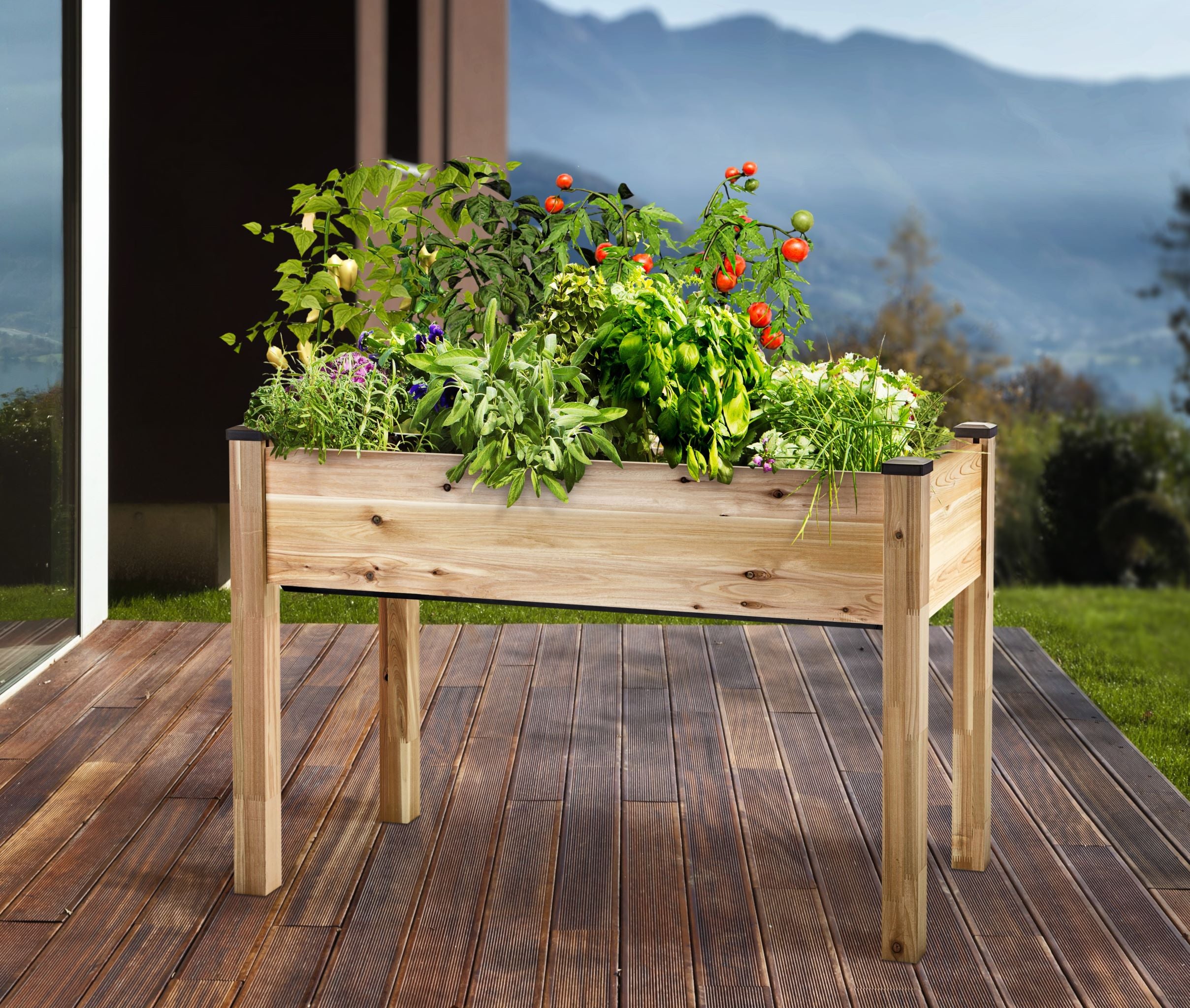
An elevated self-watering garden bed is especially well suited for growing herbs. It keeps plants easy to reach, helps maintain more consistent moisture, and makes harvesting simple. Whether placed on a patio, deck, balcony, or near the kitchen door, an elevated herb garden can turn a small space into a useful kitchen garden.
Why Herbs Are a Great Choice for Elevated Garden Beds
Herbs are ideal for elevated garden beds because they are compact, productive, and useful in small amounts. A few basil plants can provide fresh leaves for pesto, pasta, salads, and sandwiches. Rosemary can be used with roasted potatoes, chicken, bread, and grilled foods. Sage can be used fresh during the growing season or dried for fall and winter recipes, including Thanksgiving stuffing.
Unlike some vegetables that require more space or deeper root systems, many culinary herbs grow well in contained spaces when they have good sun, quality soil, and proper drainage.
An elevated bed also makes herbs easier to use. When herbs are planted close to the kitchen and at a comfortable working height, they are more likely to be harvested regularly. That matters because herbs are not just decorative plants. They are ingredients.
Fresh herbs can quickly improve everyday meals. A handful of basil can finish pasta. Chives can brighten potatoes or eggs. Parsley can add freshness to soups, salads, and roasted vegetables. Rosemary and thyme can add depth to simple roasted foods.
Choose Herbs You Actually Cook With
One of the most common herb garden mistakes is planting too many varieties simply because they look or smell interesting at the garden center. While it can be fun to experiment, a kitchen herb garden is most useful when it is planted with herbs that will actually be used.
A practical elevated herb garden might include:
-
Basil
-
Rosemary
-
Parsley
-
Chives
-
Sage
-
Thyme
A compact cherry tomato plant can also be added if the planter has enough space and sunlight. While tomatoes are not herbs, they pair naturally with basil and make the garden even more useful for summer meals.
When choosing herbs, think about the meals you already make. Basil is excellent for pesto, tomato dishes, pasta, and salads. Rosemary works well with potatoes, chicken, bread, and grilled foods. Parsley is one of the most useful herbs to have on hand because many recipes call for just a small amount. Chives are easy to grow and useful for eggs, soups, salads, and potatoes. Sage and thyme are especially good for roasted foods, poultry, beans, squash, and fall recipes.
If an herb is not something you cook with often, it may not be worth the space in a small elevated planter. The goal is not to grow the most unusual herb collection. The goal is to grow a kitchen garden that earns its place.
Start with Sun
Most culinary herbs grow best with plenty of sunlight. A good goal is at least six hours of direct sunlight per day.
Sun-loving herbs include:
-
Basil
-
Rosemary
-
Thyme
-
Oregano
-
Sage
If a patio, deck, or backyard receives strong sun for much of the day, it may be a good location for an elevated herb garden. If the space gets a little less light, choose herbs that are more tolerant of partial sun.
Herbs that can handle a little less sun include:
-
Parsley
-
Chives
-
Mint
-
Cilantro
-
Tarragon
In hot climates, some herbs may struggle during intense summer heat. Dill, for example, can be difficult to grow in strong Texas sun and may do better during cooler parts of the growing season.
The best location for an elevated herb garden is one that balances plant needs with everyday use. Close to the kitchen is ideal. Close to a hose is helpful. Close to a place where the planter will be seen and remembered is even better.
Use Good Soil
Herbs are generally easy to grow, but they do need proper drainage. This is especially important for Mediterranean herbs such as rosemary, thyme, oregano, lavender, and sage. These herbs prefer soil that drains well and does not stay soggy.
For an elevated self-watering garden bed, use a high-quality potting mix or raised bed mix. Avoid filling the planter with regular garden soil from the yard.
Garden soil can compact in a container, which makes it harder for roots to breathe. It can also hold too much moisture and become very heavy, especially when wet. That extra weight can put unnecessary stress on an elevated planter.
A good herb garden soil mix should be light enough to drain well but rich enough to support healthy growth.
A simple mix may include:
-
Quality organic potting mix or raised bed mix
-
A small amount of compost
-
Perlite or pumice if the mix feels heavy
-
A gentle organic fertilizer, used lightly
Avoid over-fertilizing herbs. Too much fertilizer can lead to fast leafy growth with less concentrated flavor. Herbs should be healthy and productive, but they should still taste like herbs.
How Self-Watering Helps
Self-watering elevated garden beds help provide more consistent moisture by using a reservoir below the planting area. Instead of relying only on surface watering, plants can draw moisture from below as needed.
This is especially helpful during hot weather or busy weeks when regular watering may be harder to manage.
Consistent moisture can benefit herbs such as:
-
Basil
-
Parsley
-
Chives
-
Cilantro
-
Mint
Other herbs, such as rosemary, thyme, oregano, and sage, generally prefer slightly drier conditions. In a self-watering planter, the key is to avoid overwatering from the top. Let the reservoir do its job, check the water level as needed, and pay attention to how the plants look.
There is no need to overcomplicate the planting plan. In one elevated self-watering planter, the goal is usually to create a practical kitchen herb garden, not separate growing zones for every plant. Choose herbs that will be used often, give them quality soil, avoid overcrowding, and harvest regularly.
What to Plant in One Elevated Herb Garden
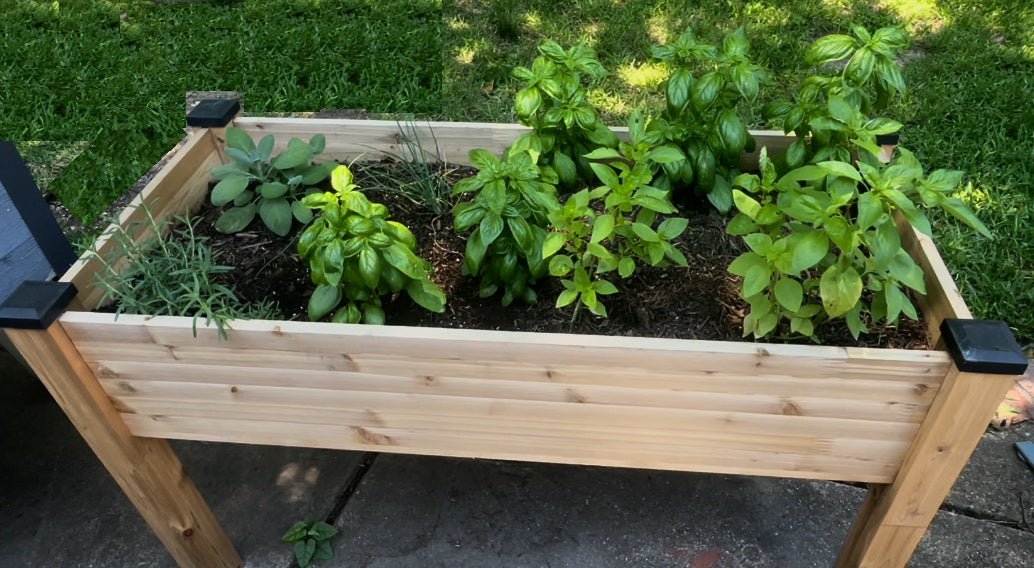
For a useful elevated kitchen herb garden, start with a small group of reliable herbs.
A good starter combination includes:
-
Basil
-
Rosemary
-
Parsley
-
Chives
-
Sage
-
Thyme
This combination can support a wide range of everyday cooking, including pesto, roasted potatoes, soups, eggs, stuffing, fish, chicken, vegetables, tomato salads, and simple garnishes.
Basil should be given a little extra room if possible. It may look small at planting time, but once it starts growing well, it can take up more space than expected.
Mint is best kept separate unless it is planted in its own container. Mint is useful and delicious, but it spreads aggressively and can quickly take over a small herb garden.
Harvest Often
Harvesting is one of the most important parts of growing herbs. Many herbs become fuller and more productive when they are harvested regularly.
Do not wait too long for the plant to become “big enough.” Herbs are meant to be used.
Basic harvesting tips:
-
Pinch basil regularly to encourage bushier growth.
-
Snip chives near the base.
-
Cut parsley from the outside stems first.
-
Harvest small sprigs of rosemary, thyme, and sage as needed.
-
Remove basil flower buds to keep the plant focused on producing leaves.
Once basil begins flowering, the flavor of the leaves can change and the plant may slow down leaf production. Pinching off flower buds helps extend the harvest.
An elevated bed makes regular harvesting easier because the plants are visible, accessible, and close to where they will be used.
Drying Herbs for Winter
When herbs grow well, they can quickly produce more than can be used fresh. Drying herbs is a simple way to preserve the harvest for later.
Good herbs for drying include:
-
Sage
-
Thyme
-
Rosemary
-
Oregano
-
Parsley
Sage is especially useful to dry for fall and winter cooking. Dried sage can be used in stuffing, poultry dishes, beans, squash, and soups.
To dry herbs, harvest healthy stems in the morning after the dew has dried. Rinse only if needed, and make sure the herbs are completely dry before storing. Tie small bundles and hang them upside down in a dry, airy place, or lay the leaves on a clean screen or towel until fully dry and crumbly.
Once dry, store herbs in clean jars away from heat and direct light. Label the jars clearly. Dried herbs can look very similar once stored, and labels make them much easier to use later.
Fresh herbs are ideal during the growing season, but dried herbs are practical, useful, and a great way to extend the value of the garden into colder months.
Best Herbs for Beginners
If you are new to growing herbs, start with reliable varieties that are useful in everyday cooking.
Basil
Great for pesto, pasta, salads, sandwiches, and tomato-based dishes. Basil grows best with sun and consistent moisture.
Rosemary
Excellent with potatoes, chicken, bread, grilled foods, and roasted vegetables. Rosemary likes sun and good drainage.
Sage
Useful with stuffing, poultry, squash, beans, and fall dishes. Sage prefers sun and soil that does not stay too wet.
Parsley
A versatile herb that works in soups, salads, sauces, vegetables, and many recipes that need a fresh finish. Parsley can tolerate a little less sun than some herbs.
Chives
Easy to grow and useful for eggs, potatoes, soups, dips, and salads.
Thyme
Small but flavorful. Thyme works well with roasted vegetables, chicken, soups, stews, and sauces. It likes good drainage.
Mint
Delicious in tea, drinks, fruit, sauces, and desserts. Mint should be grown in its own container or kept carefully contained.
Common Herb Garden Mistakes
Herbs are forgiving, but a few common mistakes can make them harder to grow.
Planting too many herbs too close together
Small starter plants can quickly become crowded. Give herbs enough room to grow and allow for airflow.
Using heavy garden soil in a container
Garden soil can compact, hold too much moisture, and add unnecessary weight to an elevated planter.
Putting sun-loving herbs in too much shade
Most herbs need several hours of sunlight each day to grow well and develop good flavor.
Overwatering woody herbs
Rosemary, thyme, oregano, and sage prefer good drainage and do not like soggy roots.
Letting basil flower too early
Pinch basil regularly and remove flower buds to encourage continued leaf growth.
Growing herbs that will not be used
A kitchen herb garden is most successful when it is planted with herbs that fit the way meals are actually cooked at home.
Why an Elevated Self-Watering Bed Makes Sense
An elevated self-watering garden bed makes herb gardening more approachable and practical.
It allows herbs to be grown on a patio, deck, balcony, or small outdoor space. It reduces bending and keeps plants easier to reach. It also helps keep moisture more consistent, which is especially helpful during hot weather or busy weeks.
For anyone who wants a useful kitchen garden without taking on a large in-ground garden, an elevated self-watering planter is a simple place to start.
It keeps fresh ingredients close, makes harvesting easy, and turns a small planting space into something that can be used almost every day.
From the Garden to the Kitchen
Herbs are one of the simplest ways to make food taste finished. A small amount of fresh basil can change a bowl of pasta. Rosemary in hot oil can make roasted potatoes smell like something special. Parsley can brighten a dish that needs freshness. Sage can bring warmth and depth to fall recipes.
That is what makes herbs such a good bridge between gardening and cooking.
They do not require acres of space. They do not require a complicated garden plan. They simply need a sunny spot, good soil, regular harvesting, and a place close enough to the kitchen that they will be used.
Final Thoughts
Growing herbs in an elevated self-watering garden bed is one of the easiest ways to create a practical kitchen garden.
Start with herbs that are already part of the way you cook. Give them sun, use good soil, avoid overcrowding, harvest often, and dry extra herbs for later use.
A garden does not need to be large to be useful. Sometimes the best garden is the one that gives you basil for pesto, rosemary for potatoes, sage for stuffing, parsley when a recipe needs just a little, cherry tomatoes for snacking, and fresh flavor right outside the door.