For a long time, herbs were the only thing I could grow. Not tomatoes. Not peppers. Not some gorgeous, overflowing, magazine-worthy garden that looked like it had its own staff. Herbs. And honestly? I loved them for that.
Herbs gave me a little gardening confidence after I had killed pretty much every house plant I had ever tried to grow. Basil, rosemary, sage, parsley — they were forgiving enough to let me try again, useful enough to make dinner better, and pretty enough to make me feel like maybe I did know what I was doing after all.
My old chef ways also have a very soft spot for fresh herbs. There is just no comparison between a handful of basil picked right before dinner and the sad little plastic clamshell from the grocery store that somehow manages to wilt before you even get it home. Fresh herbs wake food up. They make simple meals feel elegant. They make roasted potatoes smell like a restaurant slaved over them.
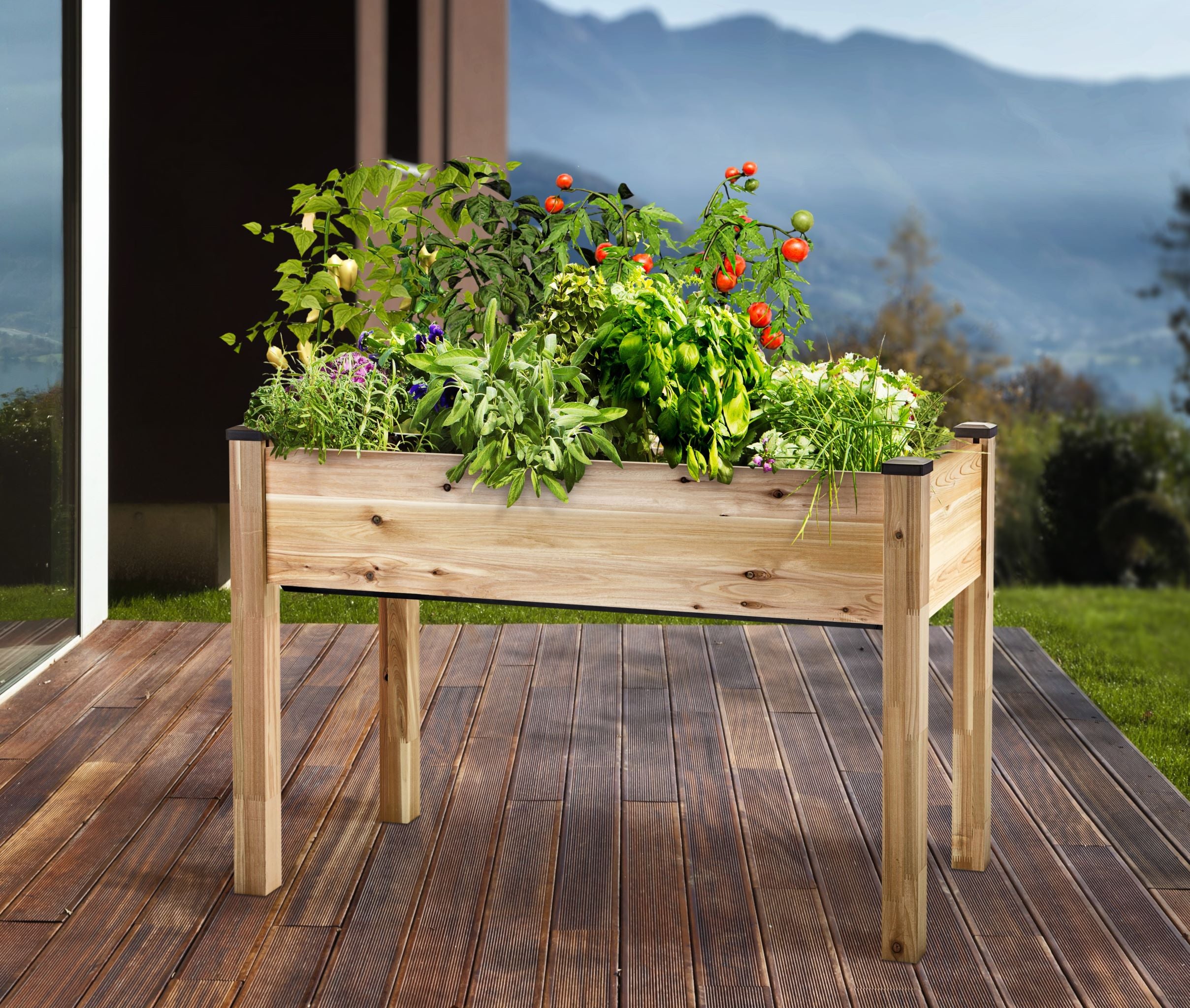
And when you grow herbs in an elevated self-watering garden bed, they become even easier to love. You do not need a huge yard. You do not need to dig up half the lawn. You do not need to become the kind of person who says things like “my herbaceous border” with a straight face.
You just need a sunny spot, good soil, a few herbs you actually cook with, and a garden bed that makes it easy to water, harvest, and keep going.

Why Herbs Are Perfect for an Elevated Garden Bed
Herbs are one of the best things to grow in an elevated garden bed because they do not need a lot of room to be useful. A few basil plants can become pesto. A rosemary plant can carry you through roasted potatoes, chicken, bread, and anything that needs to smell like you tried harder than you did. Sage can be dried for Thanksgiving stuffing, which is honestly the kind of long-game gardening I can appreciate.
And the best part? Herbs are meant to be used.
That is one reason I like them in an elevated garden bed. When herbs are tucked away in the far back corner of the yard, they become something you admire from a distance. When they are right outside the kitchen door, they become a part of dinner…That matters.
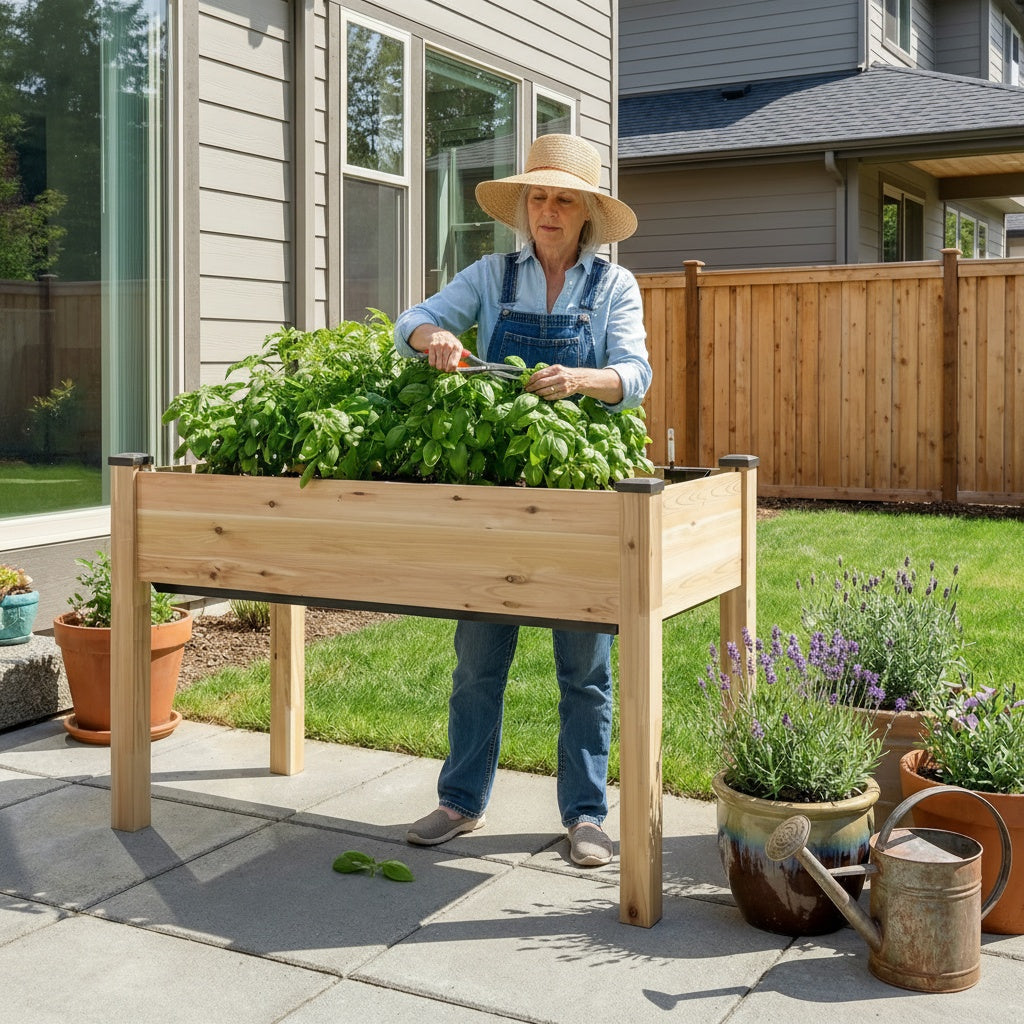
If I have to put on shoes, find clippers, walk across the yard, and fight through mosquitoes for three basil leaves, I am probably not doing it on a Tuesday night. But if the basil is right there — waist high, easy to reach, growing in a self-watering bed on the patio — suddenly I am the kind of person who finishes pasta with fresh herbs.
That is the kind of gardening I do.
The Kitchen Garden I Actually Use
There are two kinds of herb gardens. There is the dreamy one where you plant seventeen varieties because the plant tags looked charming at the garden center.

I have done this. Lemon verbena got me one year. It smelled wonderful. It sounded fancy. It looked like something a person with a very thoughtful herb garden would grow. Then I got it home and realized I did not really know what to do with it.
One of my dogs loved to eat it, so I guess there was that.
I did eventually put some in pesto, but you could not really distinguish the lemon flavor. Which felt like a lot of effort for an herb whose main contribution was apparently making my dog happy.
And then there is the herb garden you actually cook with.
I have learned to aim for the second one.
This year, I planted basil — lots of basil — rosemary, parsley, chives, sage, thyme, and cherry tomatoes. The parsley is mostly because I always forget parsley at the store, so when I need just a little bit for a recipe. Not a whole bunch. I can just snip snip from the garden. I also did cherry tomatoes as an experiment, and so far they have been fairly

successful. But my first batch of mini red juicy tomatoes got eaten by critters. Now, as soon as they are red, I bring them in.
That is the beauty of growing your own.
You do not have to buy a whole package when you need a tablespoon. You just walk outside and snip what you need.
Basil is the one that pulls me right back to pesto. I have written about creamy pesto before, but this version is different. This is the chunky, rustic, scoop-it-with-a-spoon kind. The kind where you still see bits of basil, nuts, and garlic, and it feels more like something from my kitchen than something from a jar.
Start with Sun
Most culinary herbs want sun. A good goal is at least six hours of direct sunlight a day.
That is especially true for herbs like:
- Basil
- Rosemary
- Thyme
- Oregano
- Sage
If your patio, deck, or backyard gets strong afternoon sun, that may be a great place for an elevated herb bed. If your space gets a little less light, you can still grow herbs, but you may want to choose varieties that are more tolerant of partial sun.
Good options for a little less sun include:
- Parsley
- Chives
- Mint
- Cilantro
- Tarragon
Dill is one I want to love, but I have never been able to grow it well. I think it may just be too hot in the Texas sun. Or maybe dill and I are still working things out.
The nice thing about an elevated bed is that you can place it where it makes sense for both the plants and your life. Close to the kitchen is ideal. Close to a hose is also ideal. Close to where you will actually remember it exists is probably the most ideal.
Use Good Soil — Herbs Do Not Like Wet Feet
Herbs are generally not fussy, but they do care about drainage. This is especially true for Mediterranean herbs like rosemary, thyme, oregano, lavender, and sage. These herbs do not want to sit in heavy, soggy soil. They like things a little more on the dry side.
For an elevated self-watering garden bed, start with a good-quality potting mix or raised bed mix. Do not scoop regular garden soil from the yard and dump it in.
Garden soil can get compacted in a container, and compacted soil makes it harder for roots to breathe. It can also be too heavy for an elevated planter, especially once it’s wet. That extra weight puts unnecessary stress on the planter.
A good herb bed soil mix should feel light enough to drain but rich enough to support healthy growth.
A simple mix might include:
- Quality organic potting mix or raised bed mix
- A little compost
- Perlite or pumice if the mix feels heavy
- A gentle organic fertilizer, used lightly
The “used lightly” part matters. Herbs do not need to be babied with too much fertilizer. In fact, too much fertilizer can sometimes give you lots of leafy growth with less flavor. We want healthy plants, but we also want herbs that taste like something.
How Self-Watering Helps
Self-watering garden beds are helpful because they make moisture more consistent. Instead of relying only on surface watering, the reservoir helps provide water from below.
That does not mean you can plant herbs and forget they exist. I wish.

But it does mean your plants have a little more backup, especially during hot weather or busy weeks. For herbs, that steady moisture can be especially helpful for basil, parsley, chives, cilantro, and mint. These herbs tend to like more consistent water.
Rosemary, thyme, oregano, and sage usually prefer things a little drier, so in a self-watering planter, the key is not to overdo it from the top. Let the planter do its job, keep an eye on the reservoir, and pay attention to how the plants look.
I would not overcomplicate this too much. If you have one elevated self-watering planter, you are probably not creating separate little climate zones for every herb. You are creating a practical kitchen herb garden.
So plant the herbs you use most, give them good soil, do not overcrowd them, and harvest often. That is usually a much better plan than trying to turn one planter into a botanical seating chart.
What to Plant in One Elevated Herb Garden
If you are just getting started, think in terms of usefulness, not variety for variety’s sake. A good elevated kitchen herb garden might include:
- Basil
- Rosemary
- Parsley
- Chives
- Sage
- Thyme
You can also tuck in a compact cherry tomato plant if your planter has enough space and sun. It is not an herb, obviously, but basil and tomatoes are kitchen best friends, and there is something very satisfying about walking outside and coming back with both.
That is enough variety to cover pesto, roasted potatoes, soups, eggs, stuffing, fish, chicken, vegetables, tomato salads, and all the little “this needs something green” moments that happen in real kitchens.
Give basil a little extra room if you can. Basil looks innocent when it is small, but once it

gets happy, it will take up space. Keep mint separate unless you are ready for mint to make major life decisions on behalf of the entire planter. Mint is wonderful, but it is not shy. And if there is an herb you do not cook with, skip it. This is not a test of your garden-center sophistication. It is a kitchen garden.
Harvest Often — That Is the Whole Point
This may be my favorite part of growing herbs: the more you use them, the better many of them grow. Do not wait forever for the plant to become “big enough.” Herbs are not decorations. They are ingredients.
Pinch basil regularly to encourage bushier growth. Snip chives near the base. Cut parsley from the outside stems first. Take small sprigs of rosemary, thyme, and sage as needed.
With basil especially, watch for flowers. Once basil starts flowering, the flavor can change and the plant may slow down leaf production. Pinching off flower buds helps keep the plant focused on making leaves.
This is also where an elevated bed makes a difference. When your herbs are easy to see and reach, you use them more. And when you use them more, they become part of your cooking rhythm.
A little basil in eggs. Chives on potatoes. Rosemary in roasted vegetables. Sage in stuffing. Parsley on almost anything that needs to look less like you forgot the garnish.
Drying Herbs for Winter
One of the best things about growing herbs is that, if they do well, they can go from “I hope this lives” to “what am I supposed to do with all of this?” surprisingly fast. That is a good problem.
When you have more herbs than you can use fresh, drying them is a simple way to save some for later. Sage, thyme, rosemary, oregano, and parsley are all good candidates for drying.
Sage is especially useful to dry for winter cooking. I love the idea of growing sage in summer and using it later for Thanksgiving stuffing. That feels very full-circle to me — a little patio garden showing back up at the holiday table.

To dry herbs, harvest healthy stems in the morning after the dew has dried. Rinse them only if needed, and make sure they are completely dry before storing. You can tie small bundles and hang them upside down in a dry, airy spot, or lay the leaves on a clean screen or towel until they are fully dry and crumbly.
Once dry, store the herbs in a clean jar away from heat and direct light. Label the jar, because dried green leaves have a way of becoming mysterious very quickly.
Fresh herbs are wonderful, but dried herbs have their place too. They are practical. They stretch the season. And they make winter cooking feel a little more connected to the garden.
Best Herbs for Beginners
If you are new to herb gardening, start with the reliable ones. Here are my favorite beginner-friendly herbs for an elevated self-watering bed:
Basil
Great for pesto, pasta, salads, sandwiches, and anything tomato-based. Needs sun and consistent moisture.
Rosemary
Perfect for potatoes, chicken, bread, and grilled foods. Likes sun and good drainage.
Sage
Wonderful with stuffing, poultry, squash, beans, and fall dishes. Likes sun and soil that does not stay too wet.
Parsley
Useful in almost everything. More than a garnish. Tolerates a little less sun than some herbs.
Chives
Easy, pretty, and useful for eggs, potatoes, soups, and salads.
Thyme
Small but mighty. Great for roasted vegetables, chicken, soups, and sauces. Likes good drainage.
Mint
Delicious in tea, drinks, fruit, and sauces. Keep it contained unless you want a mint empire.
A Few Common Herb Garden Mistakes
Herbs are forgiving, but there are a few mistakes that can make things harder than they need to be.
Planting too many herbs too close together
They look tiny at first. They do not stay tiny.
Using heavy garden soil in a container
It can compact, hold too much moisture, and add unnecessary weight to an elevated planter.
Putting sun-loving herbs in too much shade
They may survive, but they probably will not thrive.
Overwatering rosemary, thyme, oregano, and sage
These herbs like good drainage and do not want soggy roots.
Letting basil flower too early
Pinch it back so it keeps making leaves.
Growing herbs you do not actually use
If you do not cook with it, you probably will not harvest it. Unless your dog eats lemon verbena, in which case I suppose it has found its purpose.
Why an Elevated Self-Watering Bed Makes Sense
An elevated self-watering garden bed is not just about convenience, although I am very much in favor of convenience. It makes herb gardening more approachable. You can place it on a patio, deck, or near the kitchen. You can garden without bending as much. You can keep herbs close enough to use them. And with the self-watering reservoir, you get more consistent moisture and a little forgiveness during busy weeks.
For CedarCraft, this is exactly the kind of gardening I love: beautiful, useful, and built for real life.
Not perfect-life gardening.
Real-life gardening.
The kind where you forget things sometimes. The kind where dinner needs to happen soon. The kind where one fresh ingredient can make the whole meal feel better.
Final Thoughts
Growing herbs in an elevated self-watering garden bed is one of the easiest ways to connect the garden to the kitchen. Start with herbs you already love. Give them sun. Use good soil. Do not overcrowd them. Harvest often. Dry what you cannot use right away. Let the garden become part of your cooking instead of another thing on your to-do list.
Because sometimes the best garden is not the biggest one.
Sometimes it is the one that gives you basil for pesto, rosemary for potatoes, sage for Thanksgiving stuffing, parsley when you forgot it at the store, cherry tomatoes for snacking, and just enough confidence to keep growing.
Mischelle Raftery, The Backyard Hopeful

Before I became a gardener — or at least before I became someone willing to call herself a gardener without laughing — I was a chef. And chef habits do not really leave you.
You still think about what makes food taste finished. You still know that a little fresh basil can change a whole plate of pasta. You still understand that rosemary in hot oil is not just an ingredient; it is a smell that tells everyone dinner is going to be good. You still know parsley is not “just a garnish” when it is doing its job.
That is why herbs feel like the perfect bridge between gardening and cooking. They do not ask for acres of space. They do not require a perfect garden plan. They just sit there, right outside the door, waiting to make dinner better.
And for me, that is what makes an elevated herb garden worth growing. It is not about becoming a perfect gardener. It is about having fresh ingredients close enough to use, beautiful enough to enjoy, and practical enough to earn their spot.